
**Trigger Warning: This article contains mention of self-harming behavior, suicide, and death.**
Abigail* hanged herself inside of a closet one November* afternoon. She’d come home from high school in a friend’s car and her mother hadn’t been able to find her until she opened her closet door and found her dead. The mother called her ex-husband, who immediately caught a flight to New York to tell his other daughter the news.
This is a cold and thin account of what truly happened that afternoon, devoid of all confused facial expressions, words exchanged between a divorced couple, a frantic phone call with an airline assistant, and food not eaten, but the family would not give out any more information because the details of a death are both deeply private and utterly unfathomable to those who were not involved. After weeks of ruminating over these meager particulars, I decided to accept that my infinite questions would go unanswered: how my best friend’s little sister had figured out the science of asphyxiation, the first thing her mother did or said upon opening the closet door, how Mr. Dickinson possibly sat still through a 6-hour plane ride with this terrible, impossible secret hardening into fact in his chest, preparing the right words to tell his one remaining daughter that she would never see her sister again.
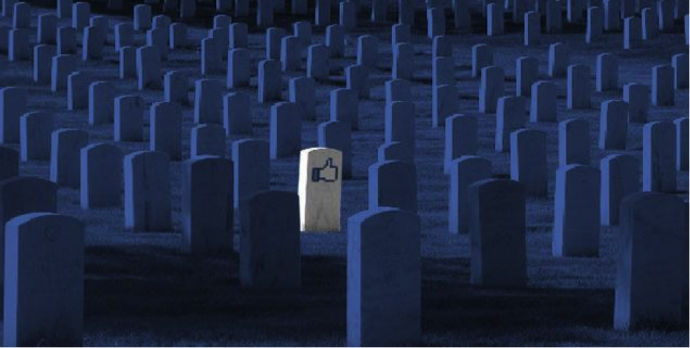
The moment my dad called me with the tear-muffled message, “Abigail is no longer with us,” I tried to activate my sixth sense and detect her absence in the air around me. I thought some atmospheric shift might have occurred to make this loss feel more real to someone living across the country. Nothing. My next instinct was to check her Facebook profile, where I was more used to accessing her. Would it still be there? Would someone have posted clues about why she did it? Her profile remained and so did all of her photos and captions and comments, a trail of activity locked in a cyber freezer offering her the illusion of life. She had posted “happy birthday!” on my wall only the week before, and I checked to make sure the post was still there. It was, but now the exclamation point gave it an eerie ring. A few of her Facebook friends had begun the social media mourning process, changing profile pictures to Winter Formal photos with Abigail and posting on her wall, “missing you <3”. Worst of all, statuses started popping up with the acronym “R.I.P.” Her death had suddenly become a standard news story, a public spectacle, it was “trending.” R.I.P is what you post to your Facebook immediately after Michael Jackson and Amy Winehouse die, not Abigail.
At Abigail’s funeral, a friend of the Dickinsons gave a speech urging her friends, family, and acquaintances to keep Abigail alive by continuing to post on her Facebook wall. She would never truly die, he comforted us, because we still had her images so readily available, we could still watch videos of her laughing, we could still message her, and for those of us who lived across the country and rarely spoke to her at all, nothing had really changed. My father’s speech came next. He used it as an opportunity to express discomfort with the former speaker’s words. He acknowledged that, yes, we should celebrate Abigail’s life, but we also needed to accept the fact that she had died. He did not explicitly mention Facebook, but he alluded to his worry that using Facebook to mourn could create a culture of young martyrdom where death and popularity bleed dangerously into each other.
I noticed on Abigail’s Facebook profile that she had “liked” the memorial page for another boy in her high school class who hanged himself the year before. Perusing someone’s Facebook memorial page, laden with grief and regrets of loved ones left with words unspoken, should offer a strong disincentive to self-destruction, but she must have found something darkly appealing in all of this activity. Perhaps she realized that this boy had become a quasi-celebrity after he passed away and saw how many people came out to express their love for him. I wonder if she convinced herself in a small, curious way that by killing herself she would never truly die because no one can ever truly die in the age of social media.
The way young people use Facebook to deal with death is new and troubling. While Facebook offers a space for communal grieving and the cultivation of support networks, it also encourages Americans’ death-denying tendencies. The phenomenon of social media and death raises a number of familiar questions about how we honor and remember the dead and whether or not intangible elements of us can remain after our physical identities perish. But these questions have assumed fresh form in the 21st-century. Younger users seem particularly disposed to casualizing and palliating death through Facebook, disconnecting their mortal end from the real, corporeal realm and making suicide seem like an appealing social maneuver. On Abigail’s birthday, a few people posted, “I hope you’re partying hard up there.” Is this sort of humor appropriate? Is it a healthy coping mechanism for mourners? Others came out and confessed, “Even though we never talked much, I really admired you. You were the nicest, funniest person I ever met.” I wonder what lonely, bullied teenager will see Abigail’s Facebook page now and think about how she too wants all of her friends, enemies, and crushes to bow down in harmony and praise her underappreciated existence. While none of us can truly comprehend the notion of non-existence, this teenager may fall mercy to the delusion that social media transcends mortality and that death will turn her into a more treasured version of herself. She may fail to recognize that death is an end in itself that even technology cannot trump. While under the impression that her personal value comes from being missed, she might miss out on all the breath-fueled connections that actually can give her, and those around her, a sense of significance.
Facebook now offers an option for families to submit a “memorialization request,” which turns the profile of a dead person into a memorial. This means that you can no longer tag that person in photos, but you can post thoughts and memories to their wall. Facebook itself seems to be struggling with how to best reconcile the eternity of cyber identities with the impermanence of human bodies, and where to draw the line between accepting someone as no longer within our sphere of communication and offering a space for loved ones to grieve and pay respect.
Even though we naturally seek explanations and alternatives when something as unfathomable as death occurs, we must re-learn to accept the mystery that is inherent in our mortal end. Abigail’s death was disorienting, crushing, shocking. Finding ways to cherish and remember her was and is of utmost importance. But when this remembrance enters the world of social media, a world awash with deceptive images and popularity contests, it can lead mourners to mitigate the gravity of the loss. It can trick us into encouraging actions like Abigail’s that only bring us greater pain. I do not think we should cease to use social media to build supportive communities during times of suffering, but we must not abuse the power of social media profiles to build invincible avatars of our physical selves.
*Names and dates have been changed to respect privacy.

I want to start by saying this comment is not an attempt to bash the author or this piece but simply an attempt to start a dialogue around whether this article is fundamentally misguided or whether there is something that I am not picking up on.
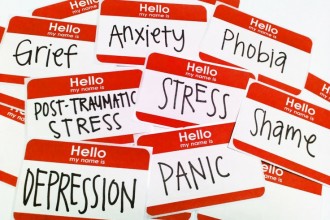
First of all, I find it absolutely astounding that in an article about suicide, mental health was not mentioned once. I understand that this article is trying to examine social media and it’s effect on perception of death, and the glorification of death, but to explicitly bring up a story about a young woman’s suicide and to not discuss mental health, is to trivialize her life in the same way the article pointed out people trivialize death on facebook.
I understand the point the article is trying to make and I agree with it, social media and online avatars do distort our perception of reality, but it is false to say that social media encourages suicide with out mentioning that our society as a whole encourages suicide by failing to give its youth the proper tools to maintain mental health. The real problem is a lack of education on self-awarness, framing…etc, not facebook. This article is misguided (to me) because it tries to talk about suicide without talking about mental health, which shows a lack of understanding about what actually leads someone to commit suicide.
For example this quotation: “this teenager may fall mercy to the delusion that social media transcends mortality and that death will turn her into a more treasured version of herself. She may fail to recognize that death is an end in itself that even technology cannot trump”
This quotation represents classic victim blaming, “fall mercy to the delusion”, “fail to recognize”. The idea that this article is making the claim that people commit suicide because they “fail to recognize” something is absurd. People commit suicide because they are depressed and our society fails miserably and preventing and treating depression. SSRI’s and other anti-depression medication are mostly useless, the majority of depression could be prevented if the right type of education around mental health were in place. Suicide is not something that people choose, it is a symptom of being chronically depressed and it horrifies me that people characterize committing suicide as a weakness or a “failure” on the victims part.
The fundamental issue with this article is that by failing to mention mental health, it is trivializing suicide into something that teenagers are deluded into doing, when in reality it is about a much larger public health issue.